

Sometimes the spark that drives transformation comes down to a single factor: an opportunity to make a change. For the nation’s formerly incarcerated, however, that chance can be tough to come by. It’s a story that plays out in cities and towns across the country. A person is released from prison, work proves difficult to find and the cycle begins again.
In part, that explains the nation’s recidivism rate. Though the numbers vary by state, roughly three-quarters of ex-convicts are rearrested within five years, and more than half of those return behind bars. Ask Brandon Chrostowski about it, and he’ll tell you that it’s more than a problem. It’s a civil-rights issue — and that’s why he decided to do something about it.
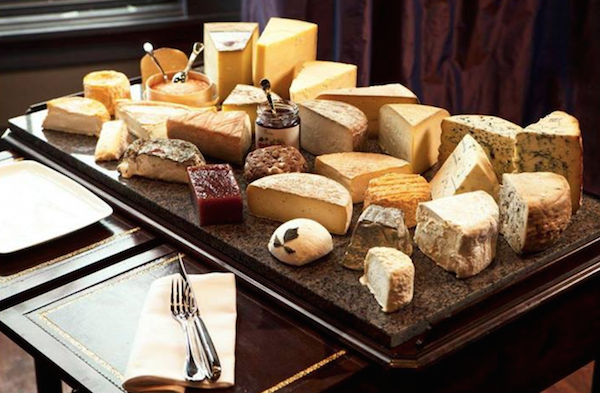
For diners at Edwins Restaurant in Cleveland Shaker Square, fine French cuisine is an initial draw. The setting is nouvelle-chic, befitting a Francophile menu that garners praise. Bar service is sophisticated, with a wine list that runs deep. But the reason to return goes beyond the plate. In almost every position, both front and back of house, ex-offenders are training to launch new careers.
It’s the only white-tablecloth restaurant of its kind in the U.S.
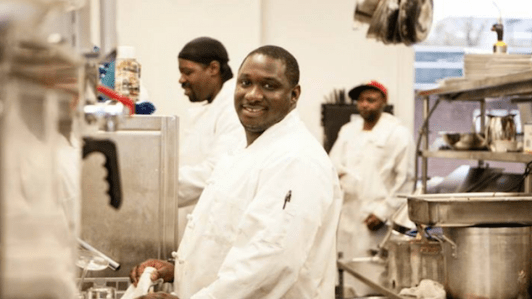
Image courtesy of Edwins Leadership & Restaurant Institute
The trainees are part of Edwins’ six-month Restaurant and Leadership Training Program, of which Chrostowski is founder and CEO. (Edwins is a portmanteau of “education” and “wins.”) Covering everything from mother sauces to white-tablecloth service, the program aims not just to equip ex-offenders with skills, but also to power them with the confidence to apply them.
It’s a program borne of careful planning. Chrostowski first had the idea in 2004, secured approval to operate as a 501© (3) in 2008,and then spent six years perfecting the pedagogy before opening the restaurant’s doors in 2013. Now, 20,000 diners visit Edwins each year.
But job prep and a fine French meal is just one part of the story. Ultimately, Edwins is a support network for those determined to challenge statistics. So while participants indeed learn a perfect braise, they also get help with everything from reinstating their driver’s license to securing medical care. It’s a humanizing approach to a sobering problem, and perhaps that’s why it’s working. The Edwins-alumni recidivism rate stands at just 1.2 percent.
To date, more than 165 people have graduated, and a new class of 30-40 begins every two months.
The campus also keeps growing. In 2016, the nonprofit launched a three-building Life Skills Center that includes a test kitchen, culinary library, fitness center and housing for students and alumni who may have nowhere else to go. A butcher shop set to open in 2017 will offer yet another level of training. And with a mayoral bid just announced, Chrostowski remains determined that Cleveland be a city where everyone gets a fair chance.
Asked what drives him, he says it’s about paying forward a break he was given. Growing up in Detroit, Chrostowski had a legal run-in and was lucky to land probation instead of a prison sentence. That “aha” moment primed him to take stock, find a mentor and launch a fine-dining career that brought him to restaurants including Charlie Trotter’s in Chicago, Lucas Carton in Paris and NYC’s Le Cirque.
Yet he knows it could have gone another way, which feeds a deeper impulse. Though he reads like an optimist (and is when it comes to a belief in transformation), Chrostowski sees himself as a pragmatist. Given the chance, he says, many ex-offenders have the capacity and strength to rebuild. They just need that all-critical chance. We sat down with Chrostowski to talk about the power of new beginnings.
Paste: What were your goals when launching Edwins?
Brandon Chrostowski: The overwhelming mission is to change the face of re-entry – to change civil rights for this community of individuals coming home. I knew it could happen. If someone is an accountant, they can do the same thing. If someone is a lawyer, they can do the same thing. It doesn’t have to be in this industry. Cooking just happens to be what I know best, and it worked for me, so I know it can work for others.
Paste: How did your path lead here?
BC: I got a break when I was younger. I met a chef, George Kalergis, who mentored me. From there, it was taking chance after chance. Going to school. Working for great people. When I said, “I’d like to give it back,” and built this idea in 2004, I needed to learn more about the dining room. I needed to learn more about the wines, about the bartending. So that was another six years, a journey of making this as perfect as can be … though nothing is ever perfect. I see both sides. I know the absolutes in every position. So if someone is being bent between them, you know where the breaking point is. You know how to make it all work.
Paste: What’s the neighborhood like?
BC: The restaurant is in Shaker Square in Cleveland, Ohio. It’s a gateway from the east where the affluent suburbs are, a good dining location. But it’s also at a crossroads with a very poor area, Buckeye, where the campus is. That community has been in poverty, but I believe we can make an impact.
To give back stats, they have been documenting recidivism at about 28 percent for the state of Ohio. This county, Cuyahoga, is at 27 percent. What’s even more significant is that there are twice as many people coming here than anywhere else in the state, at 4,000 per year. We’re still a percent below the state in recidivism.
Paste: Is food especially powerful as a mechanism for new beginnings?
BC: When I was in France I was illiterate in French, and I rose all the way up to Paris from a small town in Tours. In a restaurant setting, hard work doesn’t have a language. It’s not racial. Gender doesn’t matter. It’s hard work, and if someone is willing to work hard, they’ll move up.
As far as the food element, I think it’s very primitive. It’s in us to survive through food, and it brings us together around a table. There’s an energy that food catalyzes. It’s also extremely disciplined and scientific to an extent, when you talk about sauces, and ratios, and knife cuts. It’s very easy to measure growth.
In the dining room, the first thing that one organization said going back eight years is, “You can’t teach people how to do service in a fine-dining restaurant when they’re just out of prison.” What they didn’t understand is that all it takes to do that in this business is to find a moment in you’re life when you felt special. You want to make everyone feel that way, and everyone has that inside. The dining scene is totally conducive to fair and equal opportunities.
Paste: What is the strategy behind the front- and back-of-house training?
BC: If you want to be a chef, you’ve got to know how the dining room functions, to have the confidence to know what someone is going through so you can level with them. And sometimes you don’t know what you love. People say they want to do the kitchen. Then they do the dining room, and they love it. There’s a whole different world in the dining room, and if you’re never exposed to it, you don’t know it exists.
Paste: Why French cuisine?
BC: It’s the fundamentals of cooking: the sauces, the techniques, the ratios. Vinaigrette is three parts fat, one part acid. If you know that, now you can make vinaigrette all over the world. The fundamentals are all there. They don’t change from French to Italian cuisine. The ingredients change, but a stock is a stock. It’s eight pounds of bones, six quarts of water and a pound of mirepoix. That’s concrete, and those are the skills I got at 18 from a chef who said “You can do something in life if you learn how to do this the right way.”
Paste: What makes for a good Edwins candidate?
BC: Desire and grit. We lose half of our students during the first three weeks – that’s what I call bootcamp — but after that, attrition is very low, under 10 percent.
Paste: What are the big takeaways for your students?
BC: When things settle and we end up talking, it’s very positive. It’s, “I’ve got the tools.” But it’s not just the tools; it’s the confidence. It’s the perspective.
Paste: Is employment the biggest barrier to successful reentry?
BC: I think that it’s esteem and self-confidence, but you need a job to build that, and you need a home to feel safe. The biggest barrier to reentry is between the ears. So we support them on that journey.
Paste: What transformation do you see in your students?
BC: The transformation happens on so many levels. The first is this: someone is ready to make a change. Our general age-range is in the mid-30s. Someone may have been back to prison two or three times, and they know that now is the time. The second transformation is being ready to sacrifice and do what it takes. That doesn’t always work out based on where someone is in their process. The ultimate transformation is if someone can go step into a job and say, “Not only can I contribute. I can lead.” It takes a good six months to build that kind of esteem. We switch positions every three to four weeks.
Then you have a social level where people say, “Hey, I’d like to get custody of my kids and get my driver’s license reinstated.” We help pave the way for them. The transformation never happens overnight. It happens in all sorts of ways. But it starts when they commit to saying “I’m going to change.”
Paste: What feeds your commitment to your students?
BC: The neglect. Knowing that it was me, and that it could be anyone that I know and love. It’s the right and just thing to do. When you see inequality out there, your body is not only receptive to it, but also very sensitive to it. It hits you like a ton of bricks. So this is it. We’ve got to fight for it.
Edwins Restaurant in Cleveland Offers Ex-Offenders a New Start
Photos courtesy of Edwins Restaurant
Sometimes the spark that drives transformation comes down to a single factor: an opportunity to make a change. For the nation’s formerly incarcerated, however, that chance can be tough to come by. It’s a story that plays out in cities and towns across the country. A person is released from prison, work proves difficult to find and the cycle begins again.
In part, that explains the nation’s recidivism rate. Though the numbers vary by state, roughly three-quarters of ex-convicts are rearrested within five years, and more than half of those return behind bars. Ask Brandon Chrostowski about it, and he’ll tell you that it’s more than a problem. It’s a civil-rights issue — and that’s why he decided to do something about it.
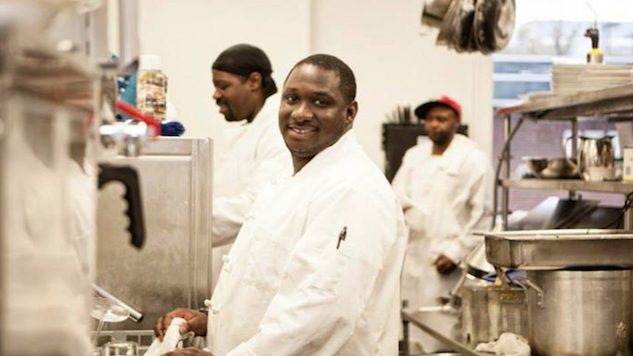
For diners at Edwins Restaurant in Cleveland Shaker Square, fine French cuisine is an initial draw. The setting is nouvelle-chic, befitting a Francophile menu that garners praise. Bar service is sophisticated, with a wine list that runs deep. But the reason to return goes beyond the plate. In almost every position, both front and back of house, ex-offenders are training to launch new careers.
It’s the only white-tablecloth restaurant of its kind in the U.S.
The trainees are part of Edwins’ six-month Restaurant and Leadership Training Program, of which Chrostowski is founder and CEO. (Edwins is a portmanteau of “education” and “wins.”) Covering everything from mother sauces to white-tablecloth service, the program aims not just to equip ex-offenders with skills, but also to power them with the confidence to apply them.
It’s a program borne of careful planning. Chrostowski first had the idea in 2004, secured approval to operate as a 501© (3) in 2008,and then spent six years perfecting the pedagogy before opening the restaurant’s doors in 2013. Now, 20,000 diners visit Edwins each year.
But job prep and a fine French meal is just one part of the story. Ultimately, Edwins is a support network for those determined to challenge statistics. So while participants indeed learn a perfect braise, they also get help with everything from reinstating their driver’s license to securing medical care. It’s a humanizing approach to a sobering problem, and perhaps that’s why it’s working. The Edwins-alumni recidivism rate stands at just 1.2 percent.
To date, more than 165 people have graduated, and a new class of 30-40 begins every two months.
The campus also keeps growing. In 2016, the nonprofit launched a three-building Life Skills Center that includes a test kitchen, culinary library, fitness center and housing for students and alumni who may have nowhere else to go. A butcher shop set to open in 2017 will offer yet another level of training. And with a mayoral bid just announced, Chrostowski remains determined that Cleveland be a city where everyone gets a fair chance.
Asked what drives him, he says it’s about paying forward a break he was given. Growing up in Detroit, Chrostowski had a legal run-in and was lucky to land probation instead of a prison sentence. That “aha” moment primed him to take stock, find a mentor and launch a fine-dining career that brought him to restaurants including Charlie Trotter’s in Chicago, Lucas Carton in Paris and NYC’s Le Cirque.
Yet he knows it could have gone another way, which feeds a deeper impulse. Though he reads like an optimist (and is when it comes to a belief in transformation), Chrostowski sees himself as a pragmatist. Given the chance, he says, many ex-offenders have the capacity and strength to rebuild. They just need that all-critical chance. We sat down with Chrostowski to talk about the power of new beginnings.
Paste: What were your goals when launching Edwins?
Brandon Chrostowski: The overwhelming mission is to change the face of re-entry – to change civil rights for this community of individuals coming home. I knew it could happen. If someone is an accountant, they can do the same thing. If someone is a lawyer, they can do the same thing. It doesn’t have to be in this industry. Cooking just happens to be what I know best, and it worked for me, so I know it can work for others.
Paste: How did your path lead here?
BC: I got a break when I was younger. I met a chef, George Kalergis, who mentored me. From there, it was taking chance after chance. Going to school. Working for great people. When I said, “I’d like to give it back,” and built this idea in 2004, I needed to learn more about the dining room. I needed to learn more about the wines, about the bartending. So that was another six years, a journey of making this as perfect as can be … though nothing is ever perfect. I see both sides. I know the absolutes in every position. So if someone is being bent between them, you know where the breaking point is. You know how to make it all work.
Paste: What’s the neighborhood like?
BC: The restaurant is in Shaker Square in Cleveland, Ohio. It’s a gateway from the east where the affluent suburbs are, a good dining location. But it’s also at a crossroads with a very poor area, Buckeye, where the campus is. That community has been in poverty, but I believe we can make an impact.
To give back stats, they have been documenting recidivism at about 28 percent for the state of Ohio. This county, Cuyahoga, is at 27 percent. What’s even more significant is that there are twice as many people coming here than anywhere else in the state, at 4,000 per year. We’re still a percent below the state in recidivism.
Paste: Is food especially powerful as a mechanism for new beginnings?
BC: When I was in France I was illiterate in French, and I rose all the way up to Paris from a small town in Tours. In a restaurant setting, hard work doesn’t have a language. It’s not racial. Gender doesn’t matter. It’s hard work, and if someone is willing to work hard, they’ll move up.
As far as the food element, I think it’s very primitive. It’s in us to survive through food, and it brings us together around a table. There’s an energy that food catalyzes. It’s also extremely disciplined and scientific to an extent, when you talk about sauces, and ratios, and knife cuts. It’s very easy to measure growth.
In the dining room, the first thing that one organization said going back eight years is, “You can’t teach people how to do service in a fine-dining restaurant when they’re just out of prison.” What they didn’t understand is that all it takes to do that in this business is to find a moment in you’re life when you felt special. You want to make everyone feel that way, and everyone has that inside. The dining scene is totally conducive to fair and equal opportunities.
Paste: What is the strategy behind the front- and back-of-house training?
BC: If you want to be a chef, you’ve got to know how the dining room functions, to have the confidence to know what someone is going through so you can level with them. And sometimes you don’t know what you love. People say they want to do the kitchen. Then they do the dining room, and they love it. There’s a whole different world in the dining room, and if you’re never exposed to it, you don’t know it exists.
Paste: Why French cuisine?
BC: It’s the fundamentals of cooking: the sauces, the techniques, the ratios. Vinaigrette is three parts fat, one part acid. If you know that, now you can make vinaigrette all over the world. The fundamentals are all there. They don’t change from French to Italian cuisine. The ingredients change, but a stock is a stock. It’s eight pounds of bones, six quarts of water and a pound of mirepoix. That’s concrete, and those are the skills I got at 18 from a chef who said “You can do something in life if you learn how to do this the right way.”
Paste: What makes for a good Edwins candidate?
BC: Desire and grit. We lose half of our students during the first three weeks – that’s what I call bootcamp — but after that, attrition is very low, under 10 percent.
Paste: What are the big takeaways for your students?
BC: When things settle and we end up talking, it’s very positive. It’s, “I’ve got the tools.” But it’s not just the tools; it’s the confidence. It’s the perspective.
Paste: Is employment the biggest barrier to successful reentry?
BC: I think that it’s esteem and self-confidence, but you need a job to build that, and you need a home to feel safe. The biggest barrier to reentry is between the ears. So we support them on that journey.
Paste: What transformation do you see in your students?
BC: The transformation happens on so many levels. The first is this: someone is ready to make a change. Our general age-range is in the mid-30s. Someone may have been back to prison two or three times, and they know that now is the time. The second transformation is being ready to sacrifice and do what it takes. That doesn’t always work out based on where someone is in their process. The ultimate transformation is if someone can go step into a job and say, “Not only can I contribute. I can lead.” It takes a good six months to build that kind of esteem. We switch positions every three to four weeks.
Then you have a social level where people say, “Hey, I’d like to get custody of my kids and get my driver’s license reinstated.” We help pave the way for them. The transformation never happens overnight. It happens in all sorts of ways. But it starts when they commit to saying “I’m going to change.”
Paste: What feeds your commitment to your students?
BC: The neglect. Knowing that it was me, and that it could be anyone that I know and love. It’s the right and just thing to do. When you see inequality out there, your body is not only receptive to it, but also very sensitive to it. It hits you like a ton of bricks. So this is it. We’ve got to fight for it.
Paste: Based on the success you’re seeing, what do you think could be done at a wider level?
BC: In a perfect practice, for this program to be taught all over the United States. But it needs to be taught to the top. You need to teach people the true fundamentals, a true perspective of whatever their craft it is. That’s my #1 advice. Number two is that every human being, regardless of their past, has to have the right to a fair and equal future.
That’s got to be driven home to the public. These are very touchy-feely things, but the energies in society and the energies in prison have to change. There is programming going on inside that’s weak. There are people taking advantage of those coming out of prison. The one silver bullet is hope.
Paste: How has the program grown?
BC: We have more graduates now, and we have also expanded in the prisons. This program, when I started doing it, was in the Grafton Correctional Institution. I still do that today. Then the Culinary Clubs are popping up, where I have a chef-instructor go into a different prison, lead two inmates through a course that they can then lead for 25 inmates. What happens is a self-empowerment where we’re not relying on the government to train and mentor men and women and give them hope – we will. We’re in nine prisons now, and we have 125 people in the state taking the class. That’s a 26-week program.
Paste: What benefits do the formerly incarcerated bring to the workplace?
BC: The biggest thing someone brings is perspective. You go to Harvard; you have a perspective of life. You go to jail or prison; you have a perspective of life. I think it was Einstein that said, “If you want to be a genius, spend time alone.” You get in touch with yourself. You start to reflect on how you work inside of this world: the good, the bad, and the ugly. It’s a hard-fought wisdom found in prisons. Now if you can equip that perspective with a skill … Now you have somebody that can communicate well with others, who can hustle and be a great businessperson.
Paste: What are some Edwins success stories?
BC: It’s different for everyone. We have people overcoming addiction and they’re flying level. It might not be that they’re working at the Ritz Carlton, but they’ve overcome a bigger burden. They’ve found a place that they’re happy with and they’re raising a family that they’re proud of.
I have people who’ve graduated who are running restaurants, that are chefs and sous chefs, or going for their sommelier license. It’s incredible what’s happening there, but most importantly, they’re in control. They can do what they want because they have a skill now. There’s a better tomorrow.
Paste: What kind of feedback do you get from hiring restaurants?
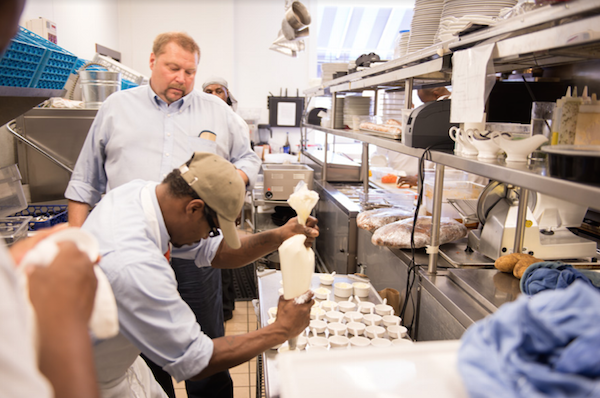
BC: It’s great. Their response is: I can teach a skill, but I can’t teach a passion. We’re weeding out the people who aren’t passionate, and we’re giving them the skills. It’s like any other school that’s out there – and even when it’s negative, it’s about developing a new plan for that student. We’re checking in. I have a case manager her who checks in bimonthly for the new grads, and for the old grads every quarter. But the feedback has been very positive.
Paste: Considering your experience at Edwins, what’s your vision for an opportunity-focused Cleveland?
BC: That’s simple. There are people suffering and there’s a way to help someone achieve their potential. That’s what works here. That’s what will work citywide. That’s what will work nationwide. When someone is struggling, and you know that there’s a way to help them achieve their potential, wouldn’t you do it?
There are still heroes out there. The way people have given, the way the community has supported us … it’s incredible. There are 70-year-olds, 80-year-olds who are giving outside of their means and they’re making a sacrifice. That’s powerful, and you don’t hear about them a lot these days. There are still lots of them. The heroes are in our communities.
Paste: Do your students end up becoming those heroes down the road?
BC: Absolutely. When someone is in a hiring position, they’re hiring our grads that are coming out of the system. They’re willing to develop talent just as we developed them.
Paste: What do you make of the fact that so few Edwins alumni reoffend?
BC: Temptation is always lurking, but there’s a stronger “yes” we’re committed to. When you start tasting success, and you start setting out on a plan that you accomplished, that’s very, very fulfilling. So when temptation creeps up — a quick dollar, whatever it may be — that “yes” is so much more powerful.
 Jenn Hall