

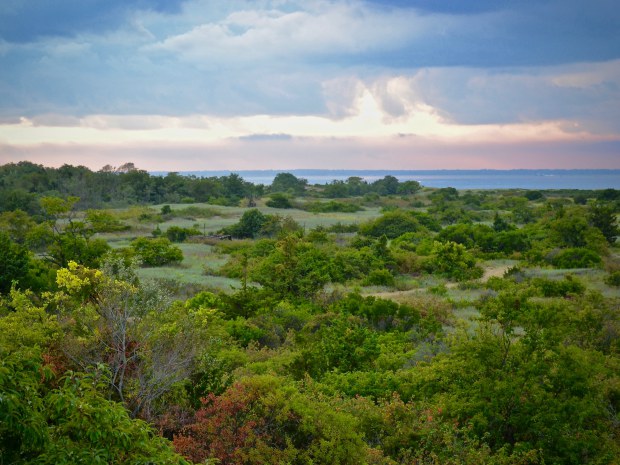
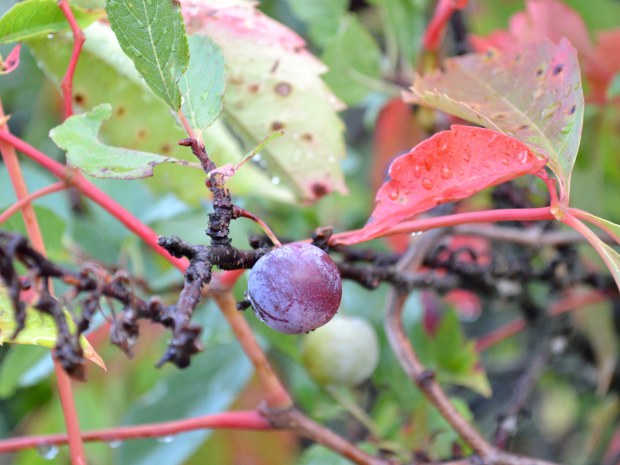
When foraging for beach plums along Sandy Hook, New Jersey, it is wise to heed the park ranger’s warning. Bearing deep-purple fruit, the plants come dressed in a tangle of poison ivy that goes scarlet this time of year – strangely enticing.
It is nearing sunset in maritime forest at the northern tip of the park and I cannot stop picking. I am covered in mosquito bites and sunburned in fire-red arcs. I reek of bug spray, salt and sweat. Trails collapse under my sand-filled shoes, gone soft after a drenching rain.
Still, I continue on, brushing against the slow-dancing plants and tempting fate. Tossing ripe fruit in my mouth, spitting stones, there is no place I’d rather be.
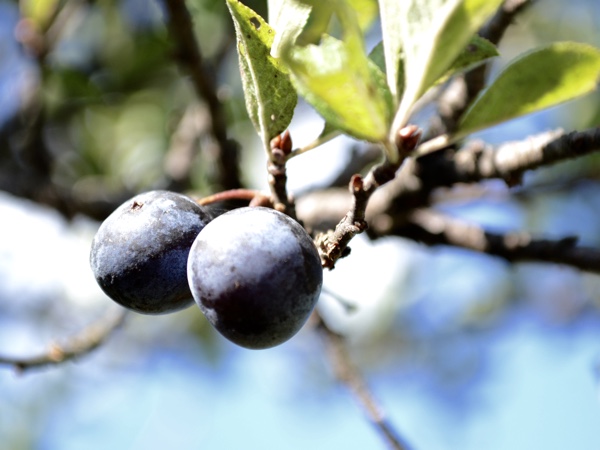
From August into September, beach plums ripen in a purple wave that rolls northward up the Eastern Seaboard. For those who have been initiated, this marks summer’s passage into fall: the cherished part of the season when the locals reclaim their beaches from vacationers. The fruit’s flavor is appropriately bittersweet, reminiscent of a cranberry kissed with peach – its stone-fruit relative.
The beach plum is a fickle mistress. Native to coastal areas from Maryland to Maine, the beach plum comes entwined with that aforementioned poison ivy, testing the accuracy of the hunter. It compels one to pick long past dinner, hunger’s echoes drowned by crashing waves. The locations of choice stands are fiercely guarded by the Order of the Beach Plum – a group that I made up, but that seems plausible.
Some years, the plants refuse to bear fruit at all. Sandy Hook, however, seems to be an exception. A beach plum Shangri-La hides just off Fisherman’s Trail at island’s end.
Meandering, I discover Hadas, who has been successful foraging here for the better part of eight years. Experienced, she wears a blue Ikea bucket around her neck and ponders whether ecological knowledge has skipped a generation. “I sometimes see young people walk right past ripe blueberry bushes,” she muses.
As for the plums, she prefers them raw, baking the rest in cakes.
Pausing from her work, she shows me how to choose the best specimens: the darkest purple fruits are the ripest, edible straight off the plant. A smaller number sweeten up in shades of crimson and gold. Regarding poison ivy, she’s unperturbed. It is easy to tell the difference.
Rumor suggests that beach plum foragers are a secretive lot, but this hasn’t been my experience. Further along, I meet Susan, who is busy guiding a first-time “plummer.” She has been picking the plums for five years, introduced to them by a neighbor. “Now, beach plum jelly is the only kind my son will eat,” she quips.
Opening her bag, she points out the ratio of ripe to unripe fruit. This is a trick of those who make jam: unripe equals more pectin, which helps it set. She leaves a jar of her homemade jelly on my car, one of several dozen she has made this year.
At Island Beach State Park, further south, naturalist Kelly Scott says scientists are still investigating why some years are more productive. What is known: the plants survive inhospitable conditions by way of a waxy coating that protects the leaves and fruit from salt air.
Island Beach, in fact, is one of several beach plum “hotspots” identified by Cornell-trained scientist Dr. Richard H. Uva. (Others include Cape Cod, Eastern Long Island, and Cape May, NJ.) Widely regarded as the father of modern beach plum cultivation, Uva has spearheaded numerous projects related to beach plum cultivation. His designation makes sense to Scott.
“This is their native land,” she explains, maritime forest buzzing all around us. “Barrier islands like this don’t really exist anymore.”
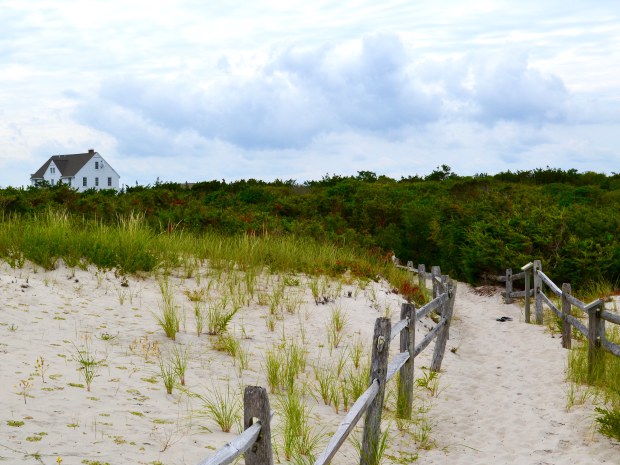
Here in the park, which sponsors a popular Beach Plum Festival each September, the plants are shrub-like, growing from four to seven feet tall. Elsewhere they can reach ten. This difference is attributed to salt-spray pruning: a natural phenomenon wherein salt air limits in-shore plants to dune height.
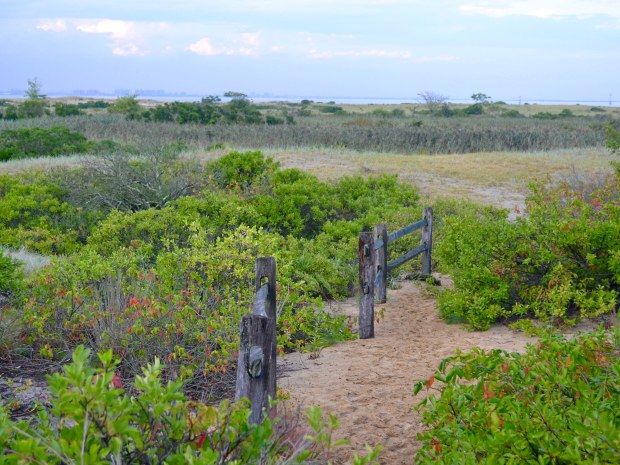
“Everything stays at the wind line,” Scott explains. “It’s one of the coolest features of the island.”
Also fascinating is the role the plants play in stabilizing the dunes, a benefit of deep roots. This isn’t just a boon to the area’s natural beauty. It prevents erosion and flooding, both top-of-mind concerns when one’s nearest neighbor is the Atlantic.
Little known inland, beach plums were among the first sights to greet the region’s first European explorers on arrival. Henry Hudson wrote of them in 1609. Giovanni da Verrazano saw them even earlier, in the 1520s. According to Alma George, who cultivates the fruits commercially from a 130-acre historic farmstead in Cape May County, beach plums were likely part of the original Thanksgiving.
 Jenn Hall